




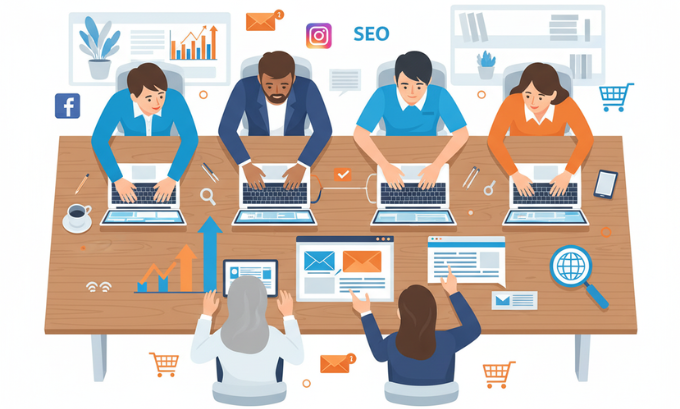
You’ve built the perfect product and launched your website, but now you face the ultimate question: where are the customers? The initial silence can be unsettling for any new entrepreneur. The key to breaking through is understanding how to attract customers to a new business with a multi-faceted approach. By combining foundational digital efforts with smart growth tactics, you can create a reliable system for customer acquisition and start learning how to scale a business successfully.
This guide is your roadmap to turning your new venture into a customer magnet. We’ll explore 12 proven strategies, providing the actionable insights you need for sustainable growth and to achieve your goal setting for success.
For a deeper dive into modern growth techniques, you can explore resources on digital marketing that provide cutting-edge tips for new ventures.
Table of Contents
Part 1: Building a Powerful Digital Footprint
Your online presence is your modern-day storefront. These foundational strategies ensure that when potential customers search for solutions, they find you.
1. Establish Authority with Value-Driven Content Marketing
Content Marketing is the practice of creating and sharing helpful, relevant content—such as blog posts, videos, or guides—to attract your target audience. Instead of selling, you’re educating, which builds trust and positions your brand as a leading expert.
When I launched my first B2B service, my marketing budget was almost nonexistent. I decided to start a blog focused on solving my ideal clients’ biggest headaches. One of my first articles, a detailed guide on financial planning for freelancers, started getting shared in niche online communities. While it didn’t create an overnight flood of clients, it did land my first two major contracts from people who found the content valuable and saw me as a credible authority.
What I Like / Strengths:
- Builds Lasting Trust: Providing free, valuable information establishes you as a go-to resource.
- Creates a Long-Term Asset: A library of quality content continues to attract organic traffic and leads for years.
- Fuels Other Marketing Channels: Content can be repurposed for social media, email newsletters, and ad campaigns.
Areas for Improvement:
- Requires Patience: It can take several months for Content Marketing efforts to gain traction and deliver a clear return on investment.
- Demands Effort: Producing genuinely helpful content requires a significant upfront investment of time and research.
2. Dominate Search Engine Results with SEO
Search Engine Optimization (SEO) is the process of optimizing your website to rank higher in search engine results for keywords related to your business. It’s about being in the right place when a customer is actively looking for a solution.
For a new venture, it’s wise to focus on local searches and long-tail keywords. For instance, a new coffee shop in Austin should target “best espresso in South Congress” rather than the broad term “coffee.” This approach attracts a highly motivated, local audience, a vital step when you’re just learning how to start a business.
Real-World Scenario: A new plumbing company in San Diego was struggling to compete. They optimized their site for terms like “emergency leak repair La Jolla” and created blog posts answering local questions, such as “How to handle hard water in San Diego.” They also focused on building quality backlinks from local home improvement blogs. Within six months, they ranked on the first page of Google, which led to a 50% increase in service calls.
What I Like / Strengths:
- Attracts High-Intent Customers: SEO connects you with users who are already looking for your products or services.
- Cost-Effective in the Long Run: While it takes effort, organic traffic is essentially free and offers a great ROI over time.
- Builds Credibility: A top ranking on Google serves as a powerful third-party endorsement, a key component of any business.
Areas for Improvement:
- Fierce Competition: Ranking for valuable keywords is an ongoing battle that requires consistent effort.
- Constantly Evolving: SEO algorithms change frequently, necessitating continuous learning and adaptation.
3. Engage Your Community Through Social Media Marketing
Social Media Marketing is about more than just posting updates; it’s a powerful tool for building a community, engaging directly with customers, and driving traffic.
- LinkedIn: Essential for B2B businesses to connect with industry professionals.
- Instagram: Perfect for visually driven brands in sectors like travel, food, or fashion.
- Facebook: Excellent for building local communities and running highly targeted advertising campaigns.
For instance, a new independent bookstore could use Instagram to post “staff picks” and run a Facebook group for a neighborhood book club. This nurtures a community that not only buys from the store but becomes its biggest advocate. These are effective low-cost marketing ideas for startups.
What I Like / Strengths:
- Direct Customer Connection: Allows for real-time conversations and invaluable feedback from your audience.
- Showcases Brand Personality: Gives you a platform to be human and build deeper, more authentic relationships.
- Powerful Ad Targeting: Social media platforms offer robust tools to reach precise demographics and interests.
Areas for Improvement:
- Demands Consistency: To see results, you need a consistent posting schedule and active engagement with your audience.
- Can Be Overwhelming: Managing multiple platforms effectively can feel like a full-time job for a new founder.
Part 2: Fast-Tracking Growth with Paid Advertising
While organic methods build a strong foundation, paid strategies can deliver immediate impact and help you reach a wider audience quickly.
4. Achieve Instant Visibility with Pay-Per-Click (PPC) Ads
Pay-Per-Click (PPC) Advertising is a digital advertising model where you pay a fee each time one of your ads is clicked. The most common form is search engine advertising (like Google Ads), which places your business at the top of relevant search results.
For a new business, PPC is the fastest way to get seen by people who are ready to buy. If you’ve launched a line of handmade leather goods, a Google Ads campaign targeting “custom leather wallet” puts you directly in front of your ideal customer. It’s a great way to test the market for new e-commerce business ideas.
What I Like / Strengths:
- Immediate Traffic: PPC campaigns can start driving targeted visitors to your website within hours of launching.
- Highly Trackable: Every click, conversion, and dollar spent can be measured, making it easy to calculate ROI and plan for the next 180 days from today.
- Laser-Focused Targeting: You can target users by keywords, location, demographics, and even their past online behavior.
Areas for Improvement:
- Can Be Expensive: Costs can escalate quickly in competitive markets, requiring careful budget management.
- No Long-Term Asset: Unlike SEO, the traffic stops the moment you turn off the ads.
5. Cut Through the Clutter with Direct Marketing
Direct Marketing involves reaching out to a targeted audience personally through channels like email, direct mail, or even text messages. A well-crafted direct campaign can feel personal, exclusive, and highly effective. For example, a company selling an ERP for small business can use this to contact key decision-makers.
A new B2B cybersecurity firm could identify 50 ideal client companies. Instead of a generic email, they could send a personalized package to each CTO containing a high-quality report on industry-specific threats. This high-touch approach is far more memorable than a digital ad. Any prudent investor would analyze the company’s value, similar to checking the Monarch Networth share price, before making a move.
What I Like / Strengths:
- Deeply Personal: Allows for messages tailored to the recipient’s specific needs and context, making them more impactful.
- Easily Measurable: Response rates are straightforward to track, giving you clear performance data.
- Targets Niche Audiences: Excellent for reaching specific decision-makers who are hard to engage through other channels.
Areas for Improvement:
- Risk of Being Intrusive: Unsolicited messages can be perceived as spam if they are not relevant and respectful.
- Dependent on Data Quality: The success of your campaign relies entirely on an accurate and up-to-date contact list.
6. Scale Your Sales Team with Affiliate Marketing
Affiliate Marketing is a performance-based strategy where you partner with content creators or other businesses (affiliates) to promote your product. In return, you pay them a commission for every sale they generate.
Imagine you’ve developed a new productivity app. You could partner with YouTubers who create content about efficiency. They review your app, and if their viewers sign up using a special link, the YouTuber earns a commission. This allows you to tap into their established audience and is a key tactic when learning how to scale a business successfully. To handle the influx of orders, you might even need a warehouse management software for small business.
What I Like / Strengths:
- Pay-for-Performance: You only pay for actual sales, making it a low-risk investment for customer acquisition.
- Leverages Social Proof: A recommendation from a trusted source is more powerful than a traditional advertisement.
- Massive Reach: You can partner with thousands of affiliates to promote your product globally. Understanding what is a business means knowing how to build these partnerships.
Areas for Improvement:
- Requires Program Management: Finding good affiliates and managing the program takes ongoing effort and attention.
- Potential Brand Dilution: Your brand’s reputation can be affected by the quality and behavior of your affiliates.
Part 3: Igniting Word-of-Mouth Momentum
Your happiest customers are your best marketers. These strategies help you formalize and amplify their advocacy into a powerful growth engine.
7. Engineer Growth with a Customer Referral Program
A Referral Program gives your existing customers an incentive to recommend your business to their network. It transforms casual word-of-mouth into a reliable and scalable customer acquisition channel.
The classic example is Dropbox, which offered free storage to both the referrer and the new user. The reward was perfectly aligned with the product and encouraged deeper engagement. This is one of the smartest small business ideas for leveraging a happy customer base, especially for an Amazon business.
What I Like / Strengths:
- High-Quality Leads: Referred customers are often the most loyal and have a higher lifetime value.
- Low Acquisition Cost: Rewarding existing customers is typically much cheaper than acquiring new ones via paid advertising.
- Strengthens Customer Loyalty: A good referral program makes your customers feel like valued partners in your growth.
Areas for Improvement:
- Requires a Great Product: You can’t ask for referrals if your customers aren’t already delighted with your service.
- Finding the Right Incentive: The reward must be valuable enough to motivate action without hurting your profit margins.
8. Pull Customers In with a Holistic Inbound Marketing Strategy
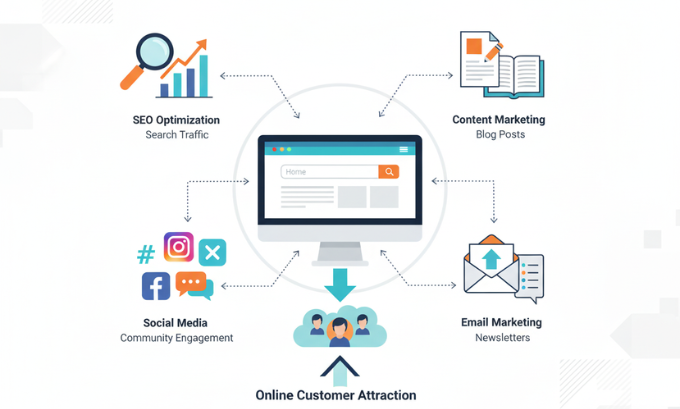
Inbound Marketing is a philosophy that combines Content Marketing, SEO, and Social Media Marketing to attract customers with valuable content and tailored experiences. Instead of interrupting them with ads, you pull them in by being helpful.
HubSpot is the champion of this approach. They provide a massive library of free resources—blogs, webinars, and free tools—that attract their ideal customers. People come for the free value, and over time, a portion of them convert into paying software users. This is a core part of many modern digital transformation strategies.
The Traction Framework, outlined in the book Traction by Gabriel Weinberg and Justin Mares, provides a system for testing various marketing channels to see which ones are most effective for your business.
| Channel Type | Example Strategy | Best For… |
|---|---|---|
| Organic | SEO, Content Marketing | Building long-term brand authority and sustainable, free traffic. |
| Paid | PPC, Social Ads | Generating immediate results and validating business offers quickly. |
| Viral | Referral Programs | Leveraging your existing user base for low-cost, high-trust acquisition. |
9. Build Relationships Through Strategic Networking
Never underestimate the power of a handshake. Attending industry events, local meetups, or even hosting a small launch party can be a powerful way to win your first clients.
Early in my career, I attended a local business expo. With just a simple table and some flyers, I spent the day having genuine conversations with other entrepreneurs. Those conversations led to my first three retainer clients because the personal trust we built was something a digital ad could never replicate. Brainstorming small business ideas often happens in these environments.
What I Like / Strengths:
- Builds Strong Bonds: Face-to-face interaction creates trust much faster than digital channels.
- Instantaneous Feedback: You get real-time reactions to your pitch and business concept.
- Unlocks Partnerships: Networking is one of the best ways to find valuable collaboration opportunities.
Areas for Improvement:
- Can Be Costly: Event tickets, travel, and time away from the business can add up.
- Limited Scalability: You can only speak to a limited number of people at any given event.
Part 4: Creative and Unconventional Growth Hacks
10. Offer a Freemium Model or Free Trial
Let customers experience your value firsthand by offering a basic version of your product for free or a limited-time free trial. This is a proven model for software companies like LinkLuminous and can be adapted for services and other products.
11. Partner with Complementary Brands
Identify businesses that serve the same target audience but don’t compete with you. A new interior designer could partner with a real estate agent and a furniture store, creating a powerful referral ecosystem. This is an excellent example of low-cost marketing ideas for startups.
12. Become Newsworthy with Public Relations (PR)
Getting your business featured in a blog, podcast, or news outlet can lend you instant credibility. Start by offering yourself as an expert source on trending topics. A unique founding story or a connection to a known entity like Monarch Networth Capital can make for a compelling pitch.
Frequently Asked Questions (FAQ)
1. What’s the quickest method to attract customers for a new business?
The fastest way is usually paid advertising like Pay-Per-Click (PPC) or social media ads. These can drive targeted traffic almost instantly but require a dedicated budget.
2. How do I attract customers without a marketing budget?
Focus on organic, “sweat equity” strategies. Use Content Marketing by starting a blog, use SEO to optimize your site, and build a community with Social Media Marketing. Strategic networking at free events is also highly effective.
3. How do I figure out who my target customer is?
Create a detailed “buyer persona.” Think about their demographics (age, location), psychographics (values, pain points), and where they spend their time online. Understanding this helps you tailor your marketing to resonate with them.
4. How many marketing strategies should I use at once?
Don’t spread yourself too thin. The Traction Framework recommends testing your top 3-5 ideas with small experiments. Find one or two that work well and focus your energy there before expanding.
5. Is Direct Marketing still relevant today?
Absolutely, when it’s personal and targeted. Generic junk mail is ineffective. However, a creative and highly relevant Direct Marketing piece can cut through the digital clutter and make a memorable impression, especially on high-value clients.
6. What is the main difference between Affiliate Marketing and Referral Programs?
Affiliate Marketing typically involves paying commissions to external partners (like bloggers or influencers) for sales. Referral Programs are aimed at your existing customers, rewarding them for recommending your business to their personal network.
7. How long will it take for SEO to start working?
SEO is a long-term play. It generally takes 3-6 months to start seeing significant results, especially for new websites. The benefit is that the results are sustainable and tend to compound over time.
Conclusion: Your Roadmap to Sustainable Customer Growth
Attracting customers to a new business is a systematic process, not a matter of luck. The most successful founders use a blended approach, combining the long-term brand building of Inbound Marketing and SEO with the immediate impact of PPC and the trusted advocacy from Referral Programs.
Begin by deeply understanding your ideal customer. From there, select two or three strategies from this guide that fit your budget and strengths. Test, measure, and iterate. By consistently delivering value and showing up where your customers are, you will build a powerful and sustainable engine for growth that transforms your new business into a lasting success.
About the Author
David Chen is a marketing strategist and business growth consultant with over 15 years of experience helping startups and small businesses acquire their first 1,000 customers. Having launched three successful ventures of his own, David combines hands-on experience with data-driven insights to provide actionable advice on everything from SEO to word-of-mouth marketing. His work has been featured in industry publications like MarketingProfs and Business Insider.
References
- Weinberg, Gabriel, and Justin Mares. Traction: How Any Startup Can Achieve Explosive Customer Growth. Portfolio, 2015.
- Forrester Research. “The Ways And Means Of B2B Buyer Journey Maps.”
- Marketo. “Lead Generation Success Survey.”
- Berger, Jonah. Contagious: How to Build Word of Mouth in the Digital Age. Simon & Schuster, 2016.
